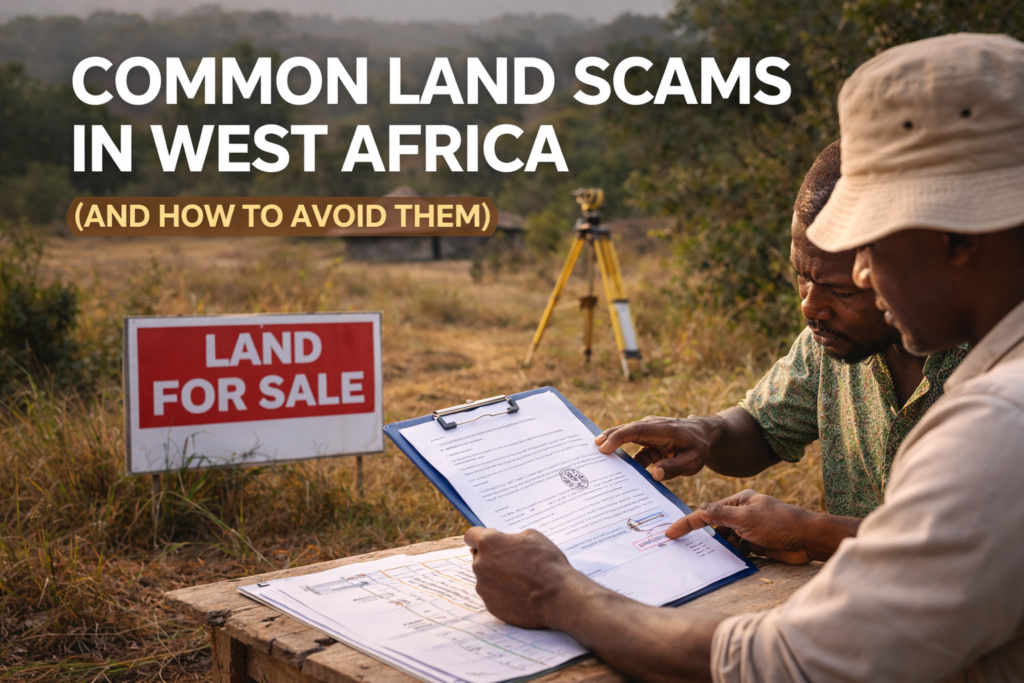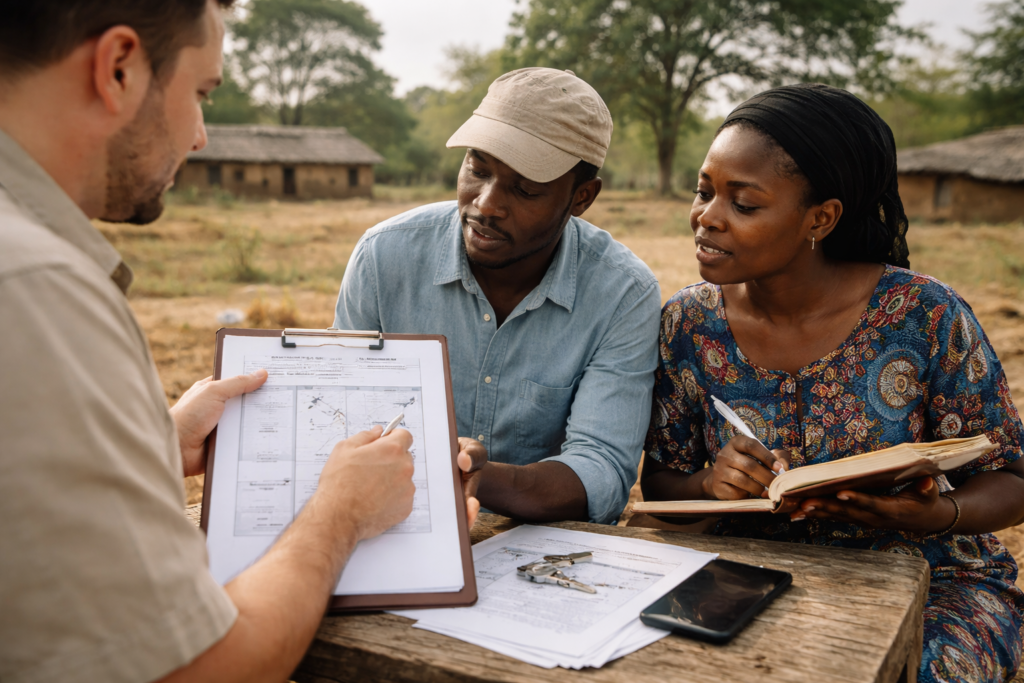
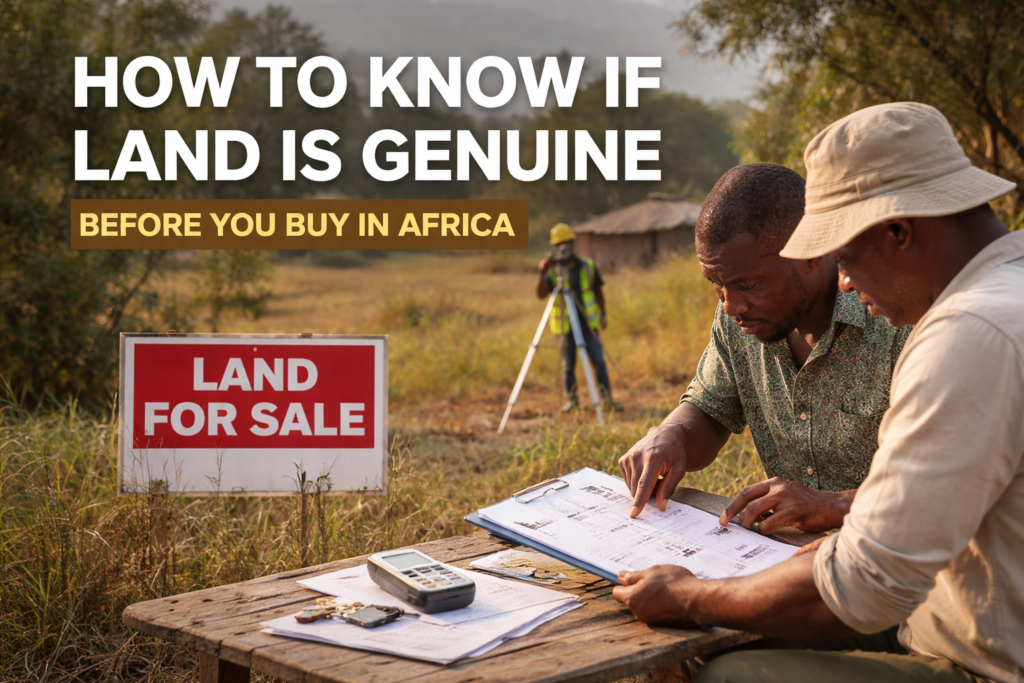
Introduction
Buying land can be a major financial decision. One of the most common questions buyers ask is:
How do you know if land is genuine before you buy?
Across many African contexts, land transactions involve layered ownership systems, documentation processes, and family or communal authority structures. Verifying land authenticity requires more than seeing paperwork — it requires a structured evaluation.
This guide explains how to verify land before buying and reduce common risks.
- 1. Confirm Who Has the Legal Authority to Sell the Land
The first step in determining whether land is genuine is to confirm who has the right to sell it.
Ask:
- Is the land individually owned?
- Is it family land?
- Is it under customary or community authority?
- Does the seller represent others?
In many African land systems, land may be family-held or under traditional authority. A person presenting land for sale may be a representative, not the sole owner.
Without clear authority, authenticity cannot be confirmed.
👉 Related: Ownership Structures Across African Land Systems
2. Check the Land Documents Carefully
Many buyers assume that seeing documents means the land is genuine. However, land documents must be understood in context.
Common land documents include:
- Indenture
- Allocation letter
- Survey plan
- Registration certificate (where applicable)
When checking land documents, ask:
- Who authorised this document?
- Is it consistent with ownership history?
- Has it been properly recorded?
- Are there conflicting claims?
Documents confirm transactions — they do not automatically confirm uncontested ownership.
👉 Related: Documentation Realities in African Land Transactions
3. Verify Family or Community Consent
One of the most overlooked risks in land transactions is incomplete consent.
If land belongs to a family or community:
- Has the wider group agreed to the sale?
- Are key stakeholders aware?
- Is the representative recognised internally?
Many land disputes arise because full consent was not obtained.
Understanding family and communal authority structures helps confirm whether the land is genuinely available for sale.
👉 See: Family Authority and Communal Land Dynamics
4. Confirm the Survey Plan and Boundaries
A survey plan describes land boundaries, but it does not prove ownership.
To verify land boundaries:
- Compare the survey plan to physical boundary markers.
- Confirm neighbouring plots align with the description.
- Ask how boundaries were originally established.
Discrepancies between survey documents and physical reality can indicate deeper issues.
👉 Related: Understanding Survey Plans and Boundary Verification
5. Be Cautious About Payment Timing
Urgency is one of the biggest red flags when buying land.
If you hear:
- “You must pay today.”
- “Another buyer is ready.”
- “Deposit first, we’ll finalise later.”
Pause.
Payment should follow verification — not replace it.
Once money is transferred, your leverage reduces significantly.
👉 See: Payment Timing Risk in Land Transactions
Common Warning Signs That Land May Not Be Genuine
Watch for:
- Resistance to explaining ownership structure
- Inconsistent document dates
- Avoidance of family involvement
- Pressure for immediate payment
- Unclear boundary explanations
One warning sign does not automatically mean fraud, but multiple inconsistencies warrant caution.
A Structured Way to Verify Land Before Buying
Rather than asking only “Is this land genuine?”, ask:
Have I systematically reviewed ownership, documentation, consent, boundaries, and payment timing?
The Structured Safe Land Buying Framework connects these steps into a practical evaluation path.
👉 Start with: The Structured Safe Land Buying Framework
Frequently Asked Questions
How can I verify land ownership in Africa?
Verify land ownership by understanding who holds authority (individual, family, or customary), reviewing documentation in context, confirming consent, and assessing boundary accuracy before payment.
Are land documents enough to prove the land is genuine?
No. Land documents confirm recorded transactions, but they may not capture full ownership authority or internal family consent.
What is the biggest risk when buying land?
One of the biggest risks is making a payment before structured verification of ownership, documentation, and consent.
Final Thoughts
Knowing if land is genuine requires structured patience. No single document or verbal assurance guarantees authenticity.
Combining ownership evaluation, document review, boundary confirmation, and careful payment timing significantly reduces risk.